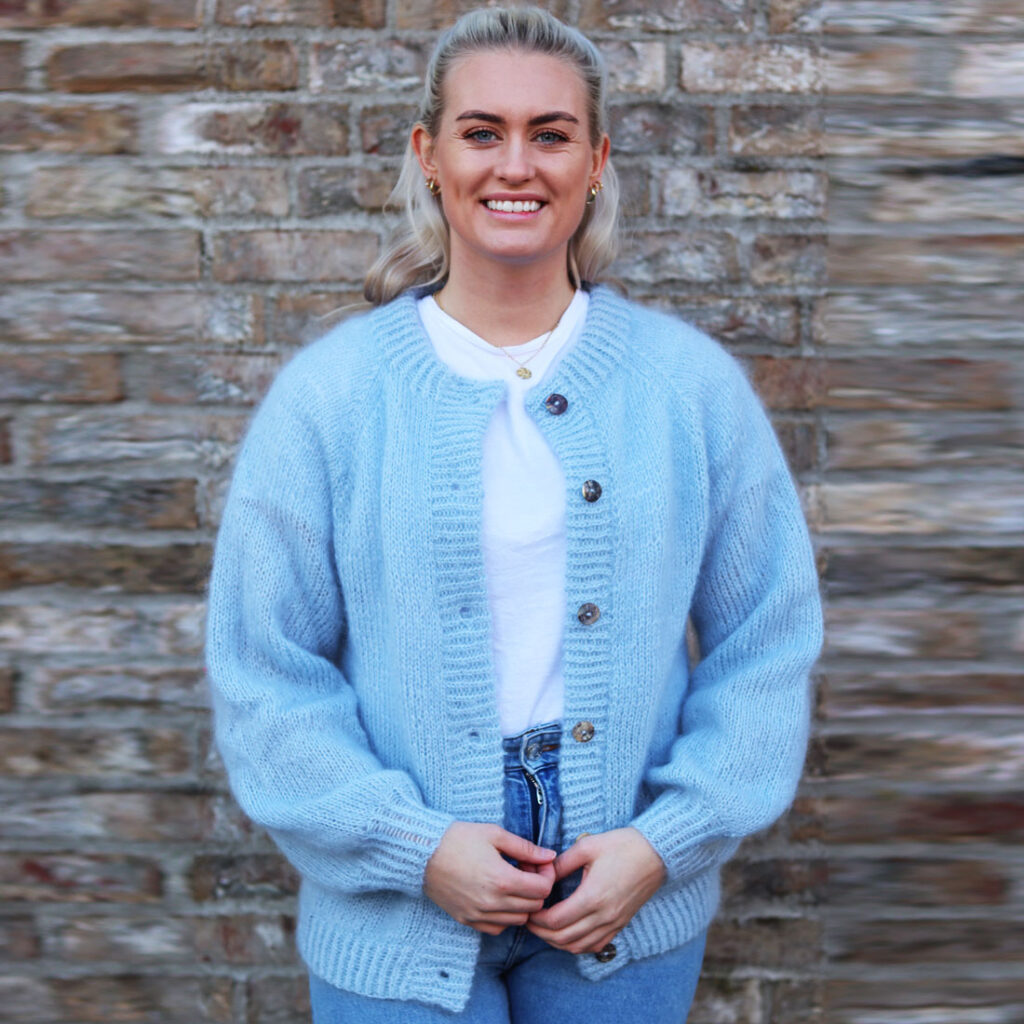
# How to Choose Yarn for a Warm Winter Sweater
Not every yarn that feels soft in the skein will keep you warm on the coldest day of the year. If you're planning a winter sweater, the yarn you choose does more to determine the finished garment's warmth than the stitch pattern, the cable count, or even the size of your needles. Fiber content and yarn weight are the two variables that matter most, and understanding how they work together will help you pick something you'll actually want to wear all season.
This guide walks through the fibers and weights best suited to cold-weather knitting, along with the honest trade-offs that come with maximizing warmth.
Why Fiber Content Is Your Starting Point
Before you even think about weight or gauge, decide which fiber (or fiber blend) you're working with. Fiber determines how the yarn insulates, how it behaves when you work up a sweat or get caught in the snow, and how the finished piece will wear over years of use.
Wool: The Reliable Foundation
Wool remains the benchmark for winter knitwear, and for good reason. Its fibers grow in a natural crimp, a wavy, corkscrew shape that creates loft between strands and traps air within the fabric. That trapped air is what does the actual work of insulating your body — the yarn itself isn't "warm" so much as it's exceptionally good at holding a layer of warmed air close to your skin.
Wool also behaves differently from plant fibers like cotton when things get damp. Rather than saturating and going cold and clingy, wool can absorb roughly a third of its own dry weight in moisture before it starts to feel wet, and it draws that moisture away from your skin in the process. That's a meaningful advantage for a sweater you might wear while shoveling snow, walking through slush, or just staying warm despite a bit of body heat and humidity underneath a coat. One practical note: knitting wool at too tight a gauge can undercut this benefit, since a dense, compressed fabric squeezes out the very air pockets that make wool insulating in the first place. A relaxed, well-blocked gauge tends to perform better than an overly tight one.
Alpaca: Exceptional Warmth for the Weight
If you want serious warmth without serious bulk, alpaca is worth the investment. Alpaca fiber has a hollow or semi-hollow core, so instead of relying only on crimp to create air pockets between strands, the fiber traps air directly inside itself. The result is a yarn that can be noticeably warmer than wool at an equivalent weight — some comparisons put alpaca at roughly one and a half times warmer than merino wool gram for gram, meaning a garment knit in alpaca can be lighter overall while delivering the same (or better) warmth.
Alpaca absorbs less moisture than wool does, which helps it maintain its insulating loft even in damp conditions, though it also means it doesn't wick sweat away from your body quite as efficiently as wool. Many knitters find the ideal middle ground is a wool-alpaca blend, which combines wool's moisture management with alpaca's superior warmth-to-weight ratio.
Choosing a Yarn Weight for Density and Warmth
Fiber sets the ceiling on how warm a yarn can be, but weight determines how much of that fiber ends up in your fabric. Thicker yarns create denser, loftier fabric with more trapped air per square inch, which is exactly what you want for a cold-weather piece.
Aran and Worsted Weight
Aran weight (sometimes called heavy worsted, or 10-ply in Australia and the UK) sits between standard worsted and bulky yarns, typically knitting up at around 16 to 18 stitches over 4 inches on 5mm to 6mm needles. It's a dependable choice for a winter sweater because it produces a fabric with real substance and structure without becoming unwieldy to wear or to knit. Cable and texture patterns also tend to show up beautifully at this weight, which is part of why so many classic winter sweater designs are written for aran-weight yarn.
Chunky and Bulky Weight
For maximum warmth in the fewest hours at the needles, chunky and bulky weight yarns are hard to beat. Their thickness means each stitch encloses more fiber and more trapped air, so the resulting fabric is naturally denser and warmer than the same pattern knit in a finer yarn. Bulky yarns also knit up fast, which makes them a favorite for knitters who want a finished sweater before the season is over rather than partway through spring.
Blends: Adding Durability Without Losing Warmth
Pure wool and pure alpaca both have real strengths, but blending in a small percentage of another fiber can extend the life of your finished sweater considerably. A touch of nylon adds strength and elasticity, helping cuffs, hems, and high-friction areas resist wear over time without sacrificing warmth. A wool-acrylic blend, meanwhile, can bring down cost and add machine-washability while acrylic's synthetic strength helps offset wool's tendency to felt or grow brittle with heavy use.
The general principle is that blended yarns let you borrow the best qualities of each component fiber. A yarn that's mostly wool or alpaca for warmth, with a smaller percentage of a synthetic fiber for resilience, often outperforms a 100% natural-fiber yarn for a garment that's going to see years of regular wear.
Trade-Offs Worth Considering Before You Cast On
Warmth sounds like an unambiguous good until you're the one wearing the sweater indoors at a holiday gathering. A few honest trade-offs are worth thinking through before you commit your yarn budget.
When "Very Warm" Becomes Too Warm
The warmest possible combination — heavy alpaca content, bulky weight, dense fabric — is genuinely excellent for standing outside in freezing temperatures. It can also be uncomfortably hot the moment you step into a heated house, office, or car. If your sweater is going to spend most of its life layered under a coat for outdoor wear, maximum warmth makes sense. If it's going to be your go-to piece for everyday indoor wear with occasional trips outside, a lighter aran or worsted weight in a wool blend will likely serve you better than the warmest yarn on the shelf.
The Weight of the Finished Garment
There's also a literal weight consideration: heavier yarns produce heavier finished sweaters. A bulky-weight sweater with a substantial amount of ease can start to feel like a real physical load on your shoulders after a few hours of wear, particularly for larger sizes or longer, tunic-length designs. If you're sensitive to a garment's drape and heft, consider sizing your ease more conservatively, choosing a slightly finer weight, or looking for a fiber like alpaca that delivers warmth without adding as much physical weight to the fabric.
Matching Yarn to Your Sweater Goals
- Outdoor warmth is the priority: Look for wool or wool-alpaca blends in bulky or chunky weight.
- All-day indoor comfort matters most: Choose a wool or wool-blend yarn in worsted or aran weight, and knit at a relaxed gauge.
- You want it to last for years: Pick a wool or alpaca yarn blended with a small percentage of nylon or acrylic.
- You want the lightest possible warm garment: Prioritize alpaca or a wool-alpaca blend over pure wool at the same weight.
There's no single "best" yarn for a winter sweater — only the best yarn for the specific way you plan to wear it. Start with how warm you actually need the finished piece to be, then let fiber and weight follow from there.