# The History of Norwegian Selbu Mittens and the Selburose Pattern
If you have ever knit a snowflake mitten, worked a star-shaped colorwork motif, or admired a pair of black-and-white patterned Scandinavian mittens in a gift shop window, you have brushed up against a story that starts in a small farming valley in central Norway. The village is Selbu, and the pattern is the Selburose — an eight-petaled star that has traveled from one young woman's mittens to knitting bags all over the world.
A Sunday Morning That Changed Norwegian Knitting
The story Norwegians tell begins on an ordinary Sunday sometime between 1855 and 1857. A teenager named Marit Guldsetbrua — later known by her married name, Marit Emstad — walked into Selbu's parish church wearing a pair of mittens she had knitted herself. They were not the plain, single-color mittens most farm women wore. Hers were worked in two colors, black and white, with a bold star pattern spread across the back of the hand.
According to the accounts passed down in Selbu, the other women at church noticed immediately. Handwork was one of the few forms of self-expression and skill a farm woman could show off in public, and a new, striking pattern was worth talking about. Marit and her sister are said to have taught the star motif to friends and neighbors, and within a few short years it had spread through the entire district.
It is a wonderful story — a single knitter's idea rippling outward until it becomes the visual signature of an entire region. It is also, importantly, a story that historians treat with some care.
Separating Documented History from Local Legend
Marit Emstad herself is a real, documented person. She was born in 1841 and lived until 1929, and later in life she sold mittens directly to Husfliden, the Norwegian craft cooperative, in Trondheim starting in 1897. That part of her biography rests on solid ground.
The church-aisle origin story is different. It comes down to us mainly through oral history and the recollections gathered by later folklorists and craft historians, and the exact year, and even whether Marit or another local knitter named Marit Sessenggjerdet deserves the very first credit for the star motif, shift slightly depending on which source you read. Serious researchers of Norwegian textile history generally present the 1857 church story as the traditional, most-repeated account of how the pattern took hold in Selbu specifically — not as an airtight, independently verified fact. In other words: Marit Emstad's role in popularizing the eight-pointed star in Selbu is well established. The precise, cinematic detail of that one Sunday is beloved folklore layered on top of a real event.
That distinction does not make the story less worth telling. Most craft traditions we now think of as "timeless" actually have a single, identifiable moment where a local innovation caught on and spread — Selbu's is simply better remembered and better loved than most.
From One Pattern to a Regional Industry
Whatever the exact origin, what happened next in Selbu is very well documented, and it is arguably the more remarkable part of the story. The star pattern did not stay a local curiosity. Selbu had long relied on quarrying millstones as an economic mainstay, but as that industry declined, knitting stepped in to fill the gap — and it did so on a scale that is hard to imagine today.
By the early 1900s, mitten knitting in Selbu had grown from a farmhouse pastime into genuine cottage industry. A local cooperative, Selbu Husflidscentralen, was established in 1899 specifically to manage quality control and distribution of the mittens being produced across the district. After 1910, national craft organizations began promoting selbuvotter (Selbu mittens) well beyond the valley, and by the 1930s the region was producing something on the order of 100,000 pairs a year. At the industry's peak in the mid-twentieth century, several thousand knitters in and around Selbu earned meaningful income from their needles — many of them women who, for the first time, had a way to make money that was entirely their own.
That last point mattered enormously in a farming community where women's labor was often invisible in the household ledger. A pair of Selbu mittens, sold through Husfliden shops or at market, put a visible price on skill that had previously gone unpaid. Mitten knitting became a genuine path to a small measure of financial independence for rural women, decades before that kind of independence was common.
The Selburose: Older Than the Legend, Newer Than You'd Think
Here is where the story gets a layer more interesting. The eight-petaled star motif itself — the actual "Selburose" — did not spring into existence in 1857 out of nowhere. Related star and rosette motifs show up across centuries of European textile history, appearing in pattern books and needlework from Italy, France, Switzerland, and Germany as far back as the 1500s and 1600s, and the design has been traced through a long chain of cross-cultural influence touching Byzantine, Coptic, and Islamic ornamental traditions. Star motifs were already appearing on knitwear in parts of western Norway before Marit Emstad's mittens made their debut.
What Selbu did was not invent the star from scratch — it was take an existing motif, refine it into the crisp, high-contrast, two-color version we now recognize instantly, and turn it into a defining regional symbol at exactly the moment Norway needed one.
A Symbol of Norwegian Identity
That timing was not a coincidence. The Selburose rose to national popularity during the decades when Norway was asserting its independence from Sweden, finally achieved in 1905. Handcraft traditions across the country were being championed as expressions of authentic Norwegian culture, distinct from anything imported or aristocratic. A pattern born on a farm woman's mittens, made entirely from Norwegian wool with Norwegian hands, fit that mood perfectly.
The mittens also settled into the rhythm of everyday Norwegian life in more intimate ways. It became customary for young women to knit pairs of Selbu mittens as courtship or wedding gifts — for a fiancé, or for wedding guests — turning the pattern into a quiet symbol of love and domestic skill passed from one generation of knitters to the next. Decades later, during the German occupation in the Second World War, Norwegians reportedly knit versions incorporating the royal coat of arms into their mittens as a small, wearable act of resistance — a reminder of how much meaning a knitting pattern can carry.
Selbu Today: Still Knitting, Still Proud
Walk through Selbu today and the craft has not faded into a museum exhibit, though there is a wonderful one — the Selbu Bygdemuseum houses the historic Husflidscentral collection and continues to document and safeguard the tradition. Hand-knitted selbuvotter are still produced locally and sold through Husfliden shops across Norway. Norwegian heritage advocates have pushed for the tradition to be recognized on UNESCO's list of intangible cultural heritage, a testament to how much the region still identifies with those two colors of wool.
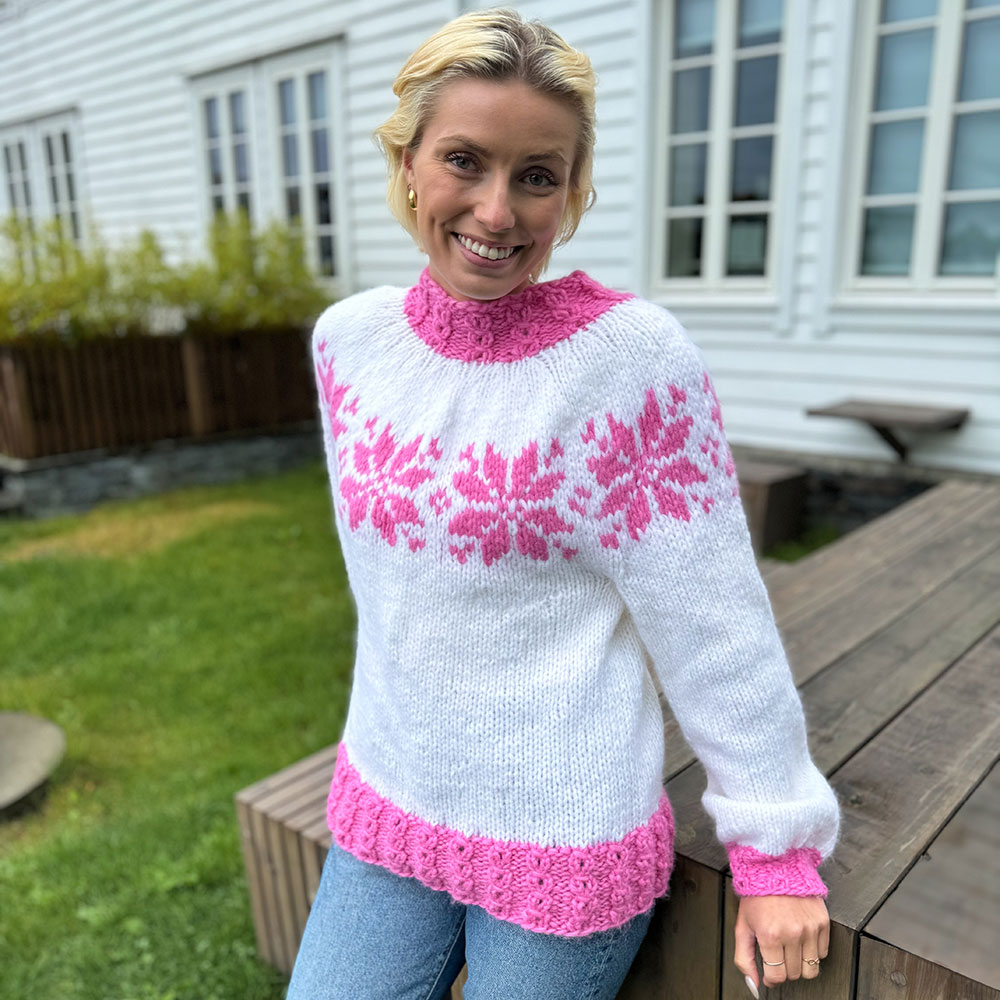
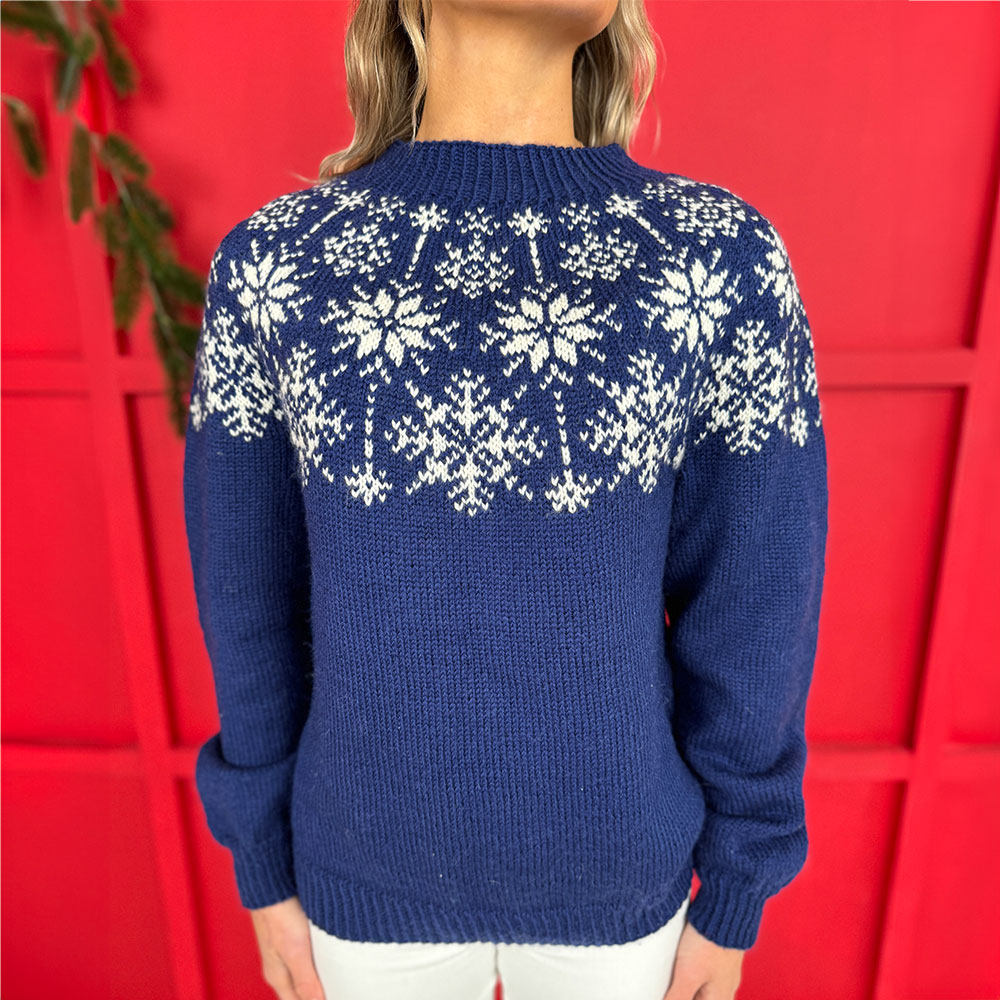
The Selburose motif, meanwhile, has had a life far beyond Selbu's borders. Exported and adapted for well over a century, it is now so closely associated with winter imagery worldwide that many knitters encounter it as a generic "snowflake" motif with no idea it has a hometown at all — let alone one tied to a single teenager's mittens and a Sunday morning at church nearly 170 years ago.
That is, in a way, the best measure of how far a good pattern can travel: it becomes so universal that its origin story has to be rediscovered. Next time you cast on a star-motif mitten, you are picking up a thread — quite literally — that runs back through a hundred years of Norwegian cottage industry, national pride, and one small village that turned a wool mitten into a lasting piece of craft history.