# Garter Stitch vs. Stockinette Stitch: The Two Basic Fabrics Explained
If you've just learned to knit, you've probably already made both of these fabrics without realizing they had names. Garter stitch and stockinette stitch are the two fundamental building blocks of knitting — nearly every pattern you'll ever pick up leans on one, the other, or a mix of both. Once you can recognize them by sight and by feel, you'll understand knitting patterns faster and make smarter choices for your own projects.
Let's break down exactly how each one is made, how to tell them apart at a glance, and when to reach for each.
What Is Garter Stitch?
Garter stitch is the simplest fabric in knitting, and it's usually the first thing new knitters learn. The technique could not be more straightforward: you knit every single row, whether you're working flat on straight needles or in rows back and forth. There's no purling to think about and no right or wrong side to track.
That simplicity produces a very distinctive fabric. Garter stitch looks the same on both sides — a series of horizontal ridges running across the piece. Each ridge is formed by two rows of knitting, so if you're trying to count rows, count the ridges and double that number.
How to Spot Garter Stitch
- Ridged texture that you can both see and feel, like tiny horizontal waves
- Identical front and back — flip it over and it looks the same
- Lies completely flat, with no curling at the edges
- Squishy and springy to the touch, with a fair amount of stretch in every direction
Garter stitch is also more visually forgiving than other stitches. Small irregularities in tension tend to blend into the ridged texture rather than standing out, which is part of why it's such a friendly starting point for beginners.
What Is Stockinette Stitch?
Stockinette stitch (sometimes spelled "stocking stitch," especially in British patterns) is made by alternating a knit row and a purl row when working flat, or by knitting every round when working in the round. That alternation is the whole secret — and it produces a completely different look from garter stitch.
The right side of stockinette shows smooth, interlocking "V" shapes stacked neatly in columns. It's the fabric most people picture when they think of a classic knitted sweater. Flip the work over, though, and you'll find the wrong side looks nothing like the front — it's covered in small horizontal bumps, sometimes called the "purl bumps." This bumpy side is actually identical to garter stitch's texture on one side, which makes sense once you know that reverse stockinette and garter are close cousins.
How to Spot Stockinette Stitch
- Smooth V-shaped stitches on the right side, arranged in neat vertical columns
- Bumpy, textured wrong side that looks completely different from the front
- Curls at the edges — the top and bottom edges roll toward the smooth side, and the side edges roll toward the bumpy side
- Drapes softly and has more stretch widthwise than lengthwise
That curling is the single most useful clue for identifying stockinette on sight. It happens because the knit and purl rows pull the fabric in slightly different directions, and nothing in a plain stockinette swatch counteracts that tension. It's not a mistake — it's just what the stitch does, and knitters routinely add a garter or ribbed border to stop it.
Garter vs. Stockinette: A Side-by-Side Comparison
| Garter Stitch | Stockinette Stitch | |
|---|---|---|
| How it's made | Knit every row | Alternate knit and purl rows |
| Right side vs. wrong side | Identical (reversible) | Different (smooth V's vs. bumps) |
| Texture | Horizontal ridges | Smooth front, bumpy back |
| Curling | Lies flat | Curls at all edges |
| Stretch | Stretchy in both directions, especially height | Stretchier widthwise, drapes more |
| Density | Denser, more fabric used per inch of height | More open and drapey |
| Beginner difficulty | Easiest — one skill, no tracking | Slightly harder — requires purling and side-tracking |
When to Use Garter Stitch
Because garter stitch lies flat and doesn't curl, it's the go-to choice anywhere you need a fabric that behaves itself without a border. Reach for garter stitch for:
- Scarves and blankets, where a flat, non-curling edge matters and you want a cozy, substantial fabric
- Borders and edgings on stockinette pieces, since a few rows of garter stitch along an edge will stop the curling from spreading
- Dishcloths and washcloths, where the ridged texture adds a bit of scrubbing power
- Beginner projects of any kind, since there's only one stitch to master and mistakes are easy to hide in the texture
Keep in mind that garter stitch uses more yarn and knits up more slowly row-for-row than stockinette, because each ridge takes two rows to form and the fabric is denser. It's also worth swatching separately for garter, since its gauge is different from stockinette even in the same yarn and needles.
When to Use Stockinette Stitch
Stockinette is the default fabric for garments because of how it drapes and skims the body. Choose stockinette for:
- Sweaters, cardigans, and fitted garments, where a smooth surface and soft drape are exactly what you want
- Colorwork and stranded knitting, since the flat, uniform V-stitches show off color patterns and motifs cleanly
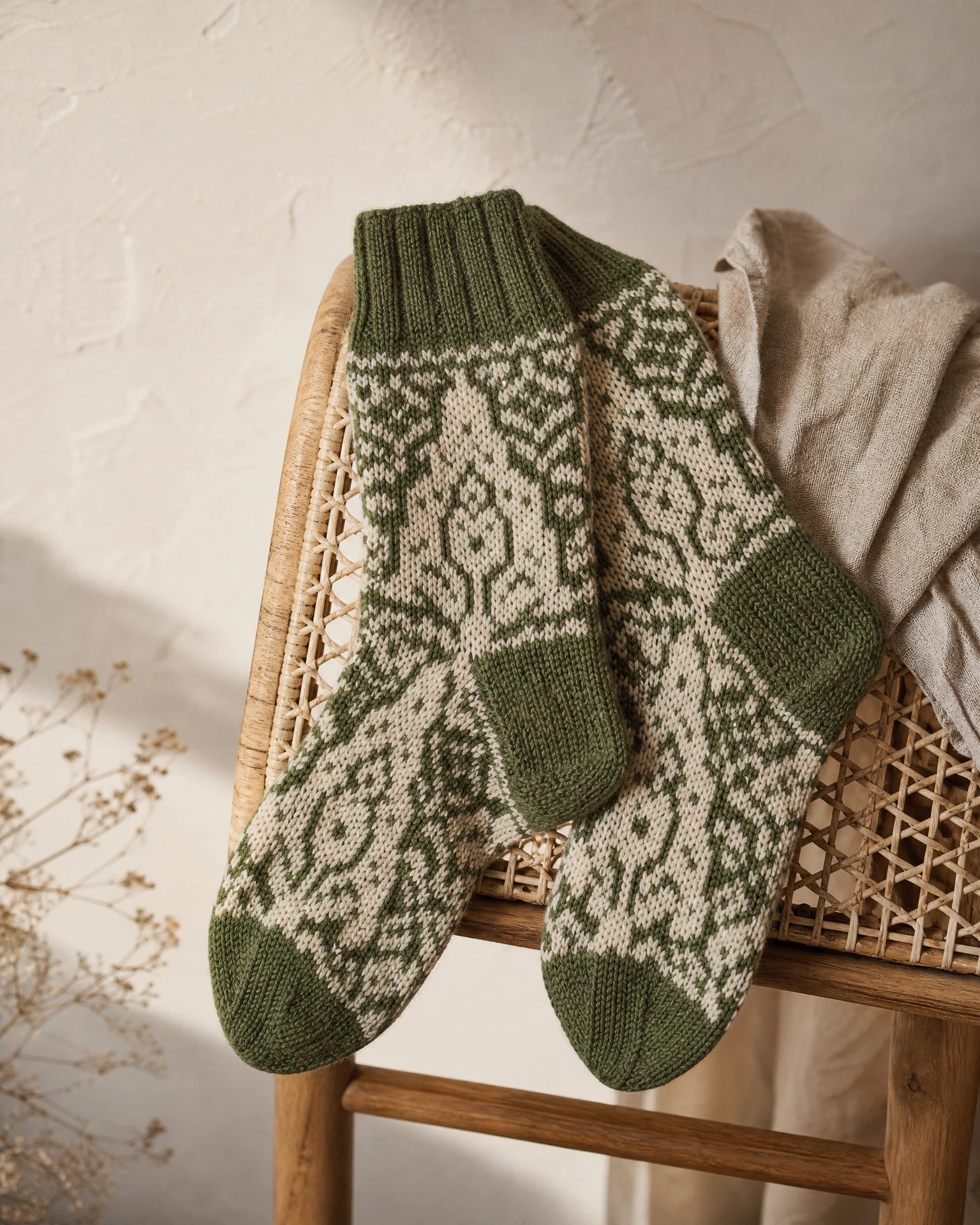
- Socks and hats, especially when working in the round, where there's no purling required and no curling to worry about since the piece is a closed tube
- Anywhere you want the fabric to move and stretch gently with the body
The tradeoff is that any stockinette worked flat will need some kind of border — garter stitch, ribbing, or a seed stitch edge are all common choices — to keep the edges from rolling. If you're knitting a scarf or blanket in stockinette without a border, expect it to curl into a tube shape, which is rarely the look you're going for.
A Quick Way to Remember the Difference
Here's a simple mental shortcut: garter is "boring but flat," and stockinette is "pretty but curly." Garter stitch trades visual interest for reliability — it always lies flat and looks the same on both sides. Stockinette trades that reliability for a smoother, more polished look, at the cost of needing help (a border) to behave.
Once you've knit a swatch of each — even just a small square of twenty stitches, twenty rows — you'll never mix them up again. Cast on, work a few inches of garter, then switch to stockinette on the same swatch. Feel the difference in your hands, watch the edges start to roll, and you'll have a reference you can return to any time a new pattern mentions either stitch.