What Is Brioche Knitting, Really?
If you've spent any time scrolling through knitting patterns, you've probably seen brioche projects: cowls, hats, and blankets with a texture so squishy and dimensional it almost looks inflated. Maybe you've also seen the pattern notes that come with them — rows full of unfamiliar abbreviations like "brk," "sl1yo," and "burp" — and quietly closed the tab.
Here's the good news: brioche knitting is not a separate skill you have to master from scratch. It's a small, repeatable trick layered on top of knit and purl stitches you already know. Once you understand the one move that makes it work, the rest is just repetition.
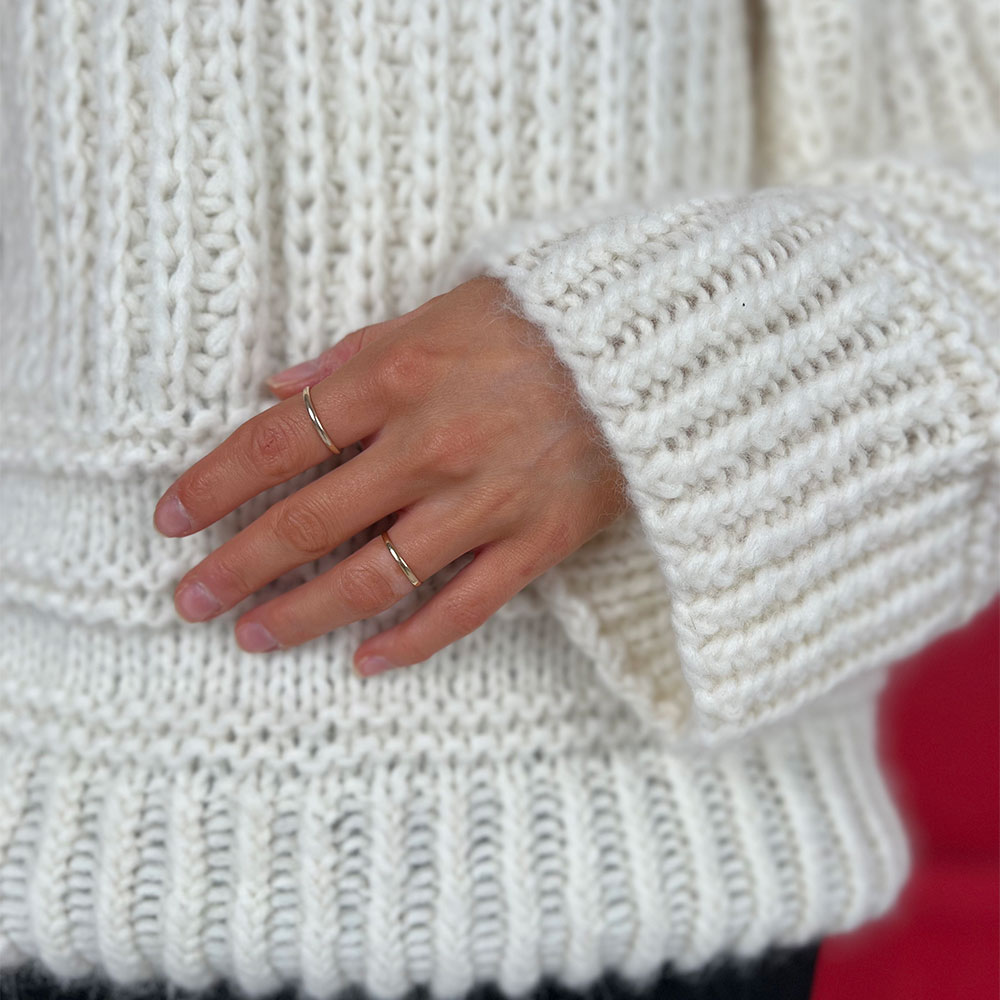
At its core, brioche is a family of knitting techniques built around yarn overs that get knitted together with a slipped stitch from the row below. That combination — slip a stitch, catch it with a yarn over, and knit the two together one row later — is what creates brioche's signature puffy, ribbed look. It isn't a single stitch pattern so much as a method you can apply in different ways, which is why you'll see it called by different names depending on the era and region, including "English rib" in some European sources.
Why Does Brioche Fabric Feel So Different?
Regular knitting builds one loop per stitch, per row. Brioche builds up two loops in the same column before locking them together, which is exactly why the fabric behaves differently from a standard rib or stockinette:
- It's noticeably squishier and thicker. Because each finished stitch is actually made of a knitted stitch plus a "tucked" yarn over from the previous row, brioche fabric has more loft and bounce than plain knitting using the same yarn and needles.
- It's fully reversible. Traditional brioche alternates knit and purl columns worked the same way on both sides, so there isn't a clear "wrong side." That makes it a favorite for scarves, cowls, and blankets that will be seen from every angle.
- It knits up in pairs of rows (or rounds). Because only half the stitches are actually worked on any given pass — the rest are slipped and carried forward — most brioche patterns are worked as two-row (or two-round) repeats rather than one row at a time. This is the part that trips people up when they're only glancing at a pattern, but it becomes intuitive once you've knit a swatch.
The Move at the Center of It All: brk and yo
Almost everything in brioche comes back to one combination, often abbreviated brk, short for "brioche knit." A brk is worked into a stitch that is sitting there paired with a yarn over from the previous row — essentially, you knit the live stitch and its "wrap" together as if they were one stitch.
The setup that creates that pairing is usually written as sl1yo (slip one, yarn over): you slip a stitch purlwise while bringing the yarn over the needle, which "parks" a loop of working yarn on top of the slipped stitch to be picked up on the next pass. Some pattern styles call the equivalent purl-based move "brp" or refer to the combined knit-together step as "brk2tog" — different designers and books use slightly different shorthand, but the underlying mechanic is the same tuck-and-knit-together idea.
Knitting instructor and brioche specialist Nancy Marchant is widely credited with standardizing much of this vocabulary, which is part of why terms like brk show up consistently across modern patterns even though brioche techniques themselves are much older.
One-Color vs. Two-Color Brioche
Once you're comfortable with the basic brk/sl1yo combination, brioche branches into two directions:
One-color brioche uses a single yarn throughout and produces a soft, deeply ribbed fabric. It's the best starting point because you only have to think about the stitch mechanics — no color management on top of it.
Two-color brioche uses two contrasting yarns worked in alternating passes, which is where those dramatic, richly patterned brioche pieces come from. Each color is knitted on its "own" pass and slipped on the other, so the two yarns interlock and create bold columns or patterned motifs with real depth. It's genuinely striking, but it also means tracking two yarns and two rows worked as one unit — which is why most teachers, and this guide, recommend getting comfortable with one-color brioche first.
Try It Yourself: A Simple One-Color Brioche Swatch
You don't need a full pattern to get a feel for brioche — a small swatch will teach your hands the rhythm. Grab a smooth, light-colored worsted weight yarn (it'll be easier to see your stitches) and needles a size or two larger than you'd normally use for that yarn, since brioche loves a little extra room to puff up.
Cast on an even number of stitches — 20 is a good swatch size.
Setup Row (wrong side): \*Yarn forward, slip 1 purlwise, yarn over the needle, knit 1; repeat from \* to the end.
This row plants a yarn over on top of every other stitch, which is the "wrap" your brk stitches will catch on the next row.
Brioche Row (repeat this row for the whole swatch): \*Brk (knit the slipped stitch together with its yarn over as one stitch), yarn forward, slip 1 purlwise, yarn over the needle; repeat from \* to the end.
Notice that every row you work is actually doing two things at once: finishing off a stitch from before (the brk) and setting up a new one for later (the sl1yo). That's the two-pass rhythm at work — you're always one step behind and one step ahead simultaneously.
Keep repeating the Brioche Row for 15–20 rows, or until you can see the ribbed, puffed-up texture developing. Don't judge it too early — brioche fabric needs a handful of rows before it "blooms" into its full loft, so a swatch that looks flat and confusing after two rows often looks completely different, and much more obviously brioche, by row ten.
A few tips for your first attempt:
- Count stitches, not rows, when you're lost. If your stitch count stays consistent, you're almost certainly executing the pattern correctly even if the fabric looks strange mid-swatch.
- Use markers generously if you're working in pattern alongside other stitches, since a missed yarn over is the most common brioche slip-up.
- Bind off with a stretchy method. Because brioche fabric has so much give, a standard bind-off can pull in and flatten your beautiful puffy edge. A brioche-specific or otherwise stretchy bind-off preserves the drape.
Where Brioche Comes From
The name itself is a fun bit of knitting trivia. While brioche techniques have old and somewhat murky origins — some sources trace early tucked-stitch knitting influences to the Middle East — the name most likely nods to the brioche dinner roll: a bread made of two connected lumps of dough stacked together, not unlike the way a brioche stitch is really two loops (a knit stitch and a yarn over) fused into one. Some knitting historians also point to a more playful theory, that "brioche" borrows from old French slang for a small mistake, referencing how easy it is to slip up when you're new to the technique. Either origin story makes the name feel a little more approachable once you know it isn't describing something mysterious — just something layered.
You're Ready to Give It a Go
Brioche has a reputation for being an "advanced" technique, but the truth is it's really just one small combination move — slip, yarn over, knit together — repeated with patience. Once your hands learn the rhythm of the two-row repeat, the intimidating-looking abbreviations in a pattern will start reading like an old friend's shorthand instead of a foreign language.
Cast on a small swatch this week, work through the wobbly first few rows, and watch the fabric bloom into that signature squish. From there, you'll be ready to look at a two-color brioche pattern with genuine curiosity instead of dread.